
Can sustainable lighting really protect the nighttime landscape?
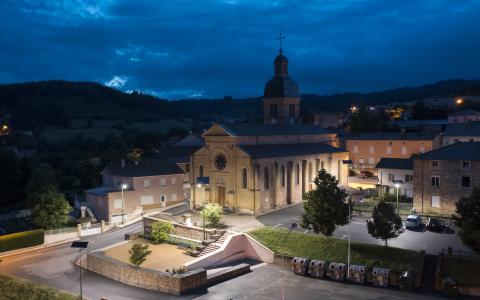
Public lighting has transformed the night by extending our activities and improving safety and quality of life. Yet artificial light can disrupt biodiversity and damage natural habitats. In this context, sustainable lighting, and solar lighting in particular, is emerging as an innovative solution to balance human needs, energy efficiency and the protection of the nighttime environment.
Understanding the challenges of light pollution
Light pollution refers to the excessive use of artificial light at night. It can appear as glare, skyglow or unnecessary illumination of areas with little or no activity. According to the International Dark-Sky Association, this overuse of light is now one of the main reasons why starry skies are gradually disappearing across many parts of the world. Beyond the visual impact, the environmental consequences are significant: disruption of biological cycles, disorientation of nocturnal species, fragmentation of ecological corridors, and increased unnecessary energy consumption. These challenges highlight the urgent need to rethink both public and private lighting models.
Source: DarkSky International
Sustainable lighting: principles and benefits
A holistic, responsible approach
Contrary to common belief, sustainable lighting is not limited to simply changing technology. It relies on a comprehensive approach that considers the right level of illumination, controlled operating hours, precise light direction and carefully selected light sources. This helps reduce light nuisance while maintaining comfort and safety for users.
For public lighting, this approach can be implemented through several key levers:
1. Optics tailored to each project, enabling precise control of light distribution according to use:
-
parking optics for large open areas;
-
road optics for streets under 7 metres wide;
-
asymmetric optics dedicated to pedestrian crossings.
2.Adjustable lighting schedules, allowing light levels to be reduced during quieter nighttime hours to avoid unnecessary energy use.
-
Warmer colour temperatures (between 2000 K and 4000 K) to reduce impacts on photosensitive species.
-
Low-carbon solutions that support wider environmental goals.
Preserving the night through innovation
Adapting lighting to real-world uses
Many studies, including research conducted by INRAE (French National Research Institute for Agriculture, Food and Environment), show that aligning lighting with actual local needs can successfully balance residents’ expectations with biodiversity protection. Dimming, time-based management, and prioritising key areas are all effective ways to reduce light pollution.
International initiatives led by the Dark Sky movement also demonstrate that protecting the night can enhance local identity and attractiveness. “Dark sky” labelled areas follow strict sustainable lighting principles, supporting an environmentally responsible model that remains compatible with local development.
Fonroche Lighting - expertise supporting sustainable lighting
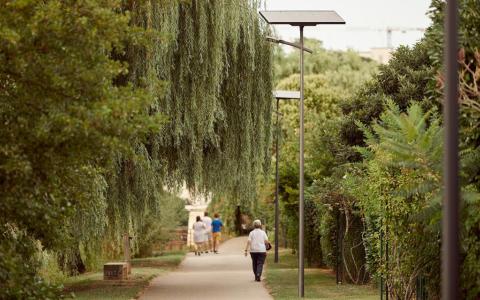
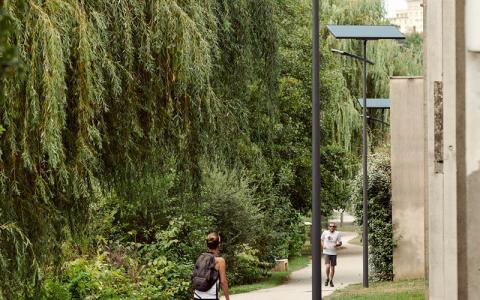
As a committed player in solar lighting, Fonroche Lighting supports local authorities in transitioning towards more sustainable infrastructure. By deploying autonomous, intelligent, and environmentally responsible solutions, the company helps reduce the environmental footprint of public lighting while ensuring high performance and reliability.
With systems designed to lower energy consumption, optimise light distribution, and reduce carbon impact, solar lighting is becoming a powerful tool for protecting the nighttime landscape.
By combining high-performance technologies, solar lighting, intelligent control, and an eco-responsible vision, it is possible to significantly reduce the environmental impact of artificial light. Sustainable lighting is therefore emerging as an innovative solution to restore the true value of the night without compromising essential uses.