Extreme cold: how does solar-powered street lighting remain reliable when winter drags on?
In harsh winter conditions, public lighting becomes a daily necessity for pedestrian routes, roads, public spaces, and remote sites. When days grow short, nights stretch longer, and snow settles in, one key question arises: can solar lighting ensure continuous operation despite freezing temperatures, frost, winter cycles, and periods of low solar resource?
The key conditions for maintaining lighting continuity in winter
In cold climates, reliability hinges on two critical factors. The first is daily energy management; the second is long-term battery performance at low temperatures. The technical principles behind winter operation all point to the same logic. Lighting output must match the energy actually available through integrated regulation, then adjust the following night based on an energy balance.
In other words, winter service continuity depends on intelligent energy management and rigorous qualification of components exposed to low temperatures.
Why cold weather is a real-world stress test
Cold weather challenges lighting systems on multiple fronts simultaneously. Longer nights drive up lighting demand. Reduced sunlight limits recharging capacity. Snow and frost add mechanical and operational load to solar streetlights.
Under these conditions, the goal is to maintain a stable level of service throughout the entire winter, at the very moment communities depend on it most.
What makes a solar lighting project reliable in cold climates
The first factor is sizing. In winter, anticipation is everything: if the energy margin doesn't account for long nights, light output will fall short exactly when it's needed most. Solar streetlight sizing must therefore factor in seasonality, periods of low solar resource, and site-specific constraints.
The second factor is energy management. Adjusting lighting output based on available energy is the primary means of maintaining service continuity throughout the season.
The third factor is energy storage and its validation. Low temperatures can degrade certain battery types, which is why climatic testing and component certification are critical to any reliable cold-weather solar lighting project.
Field example: Laval
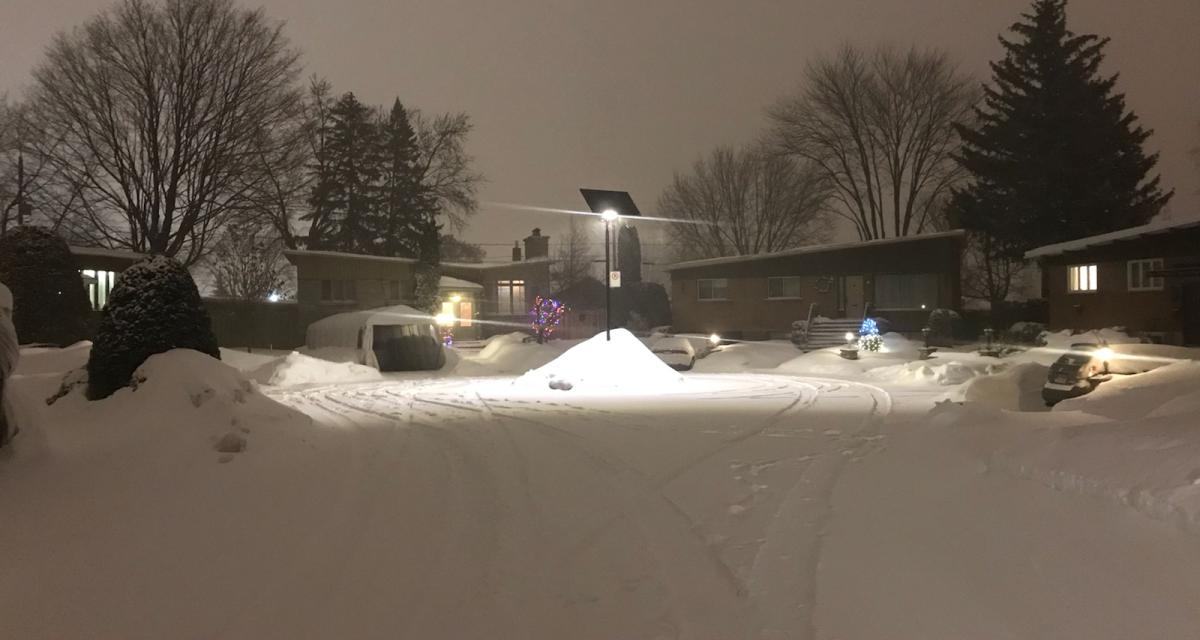
A documented project in Laval (Canada), installed in 2018, illustrates performance in a winter-constrained environment. This reference makes one thing clear: expected performance is not measured at a single point in time, but designed to last in a context where cold and seasonality are built into the project requirements from the start.
Field example: Evolène
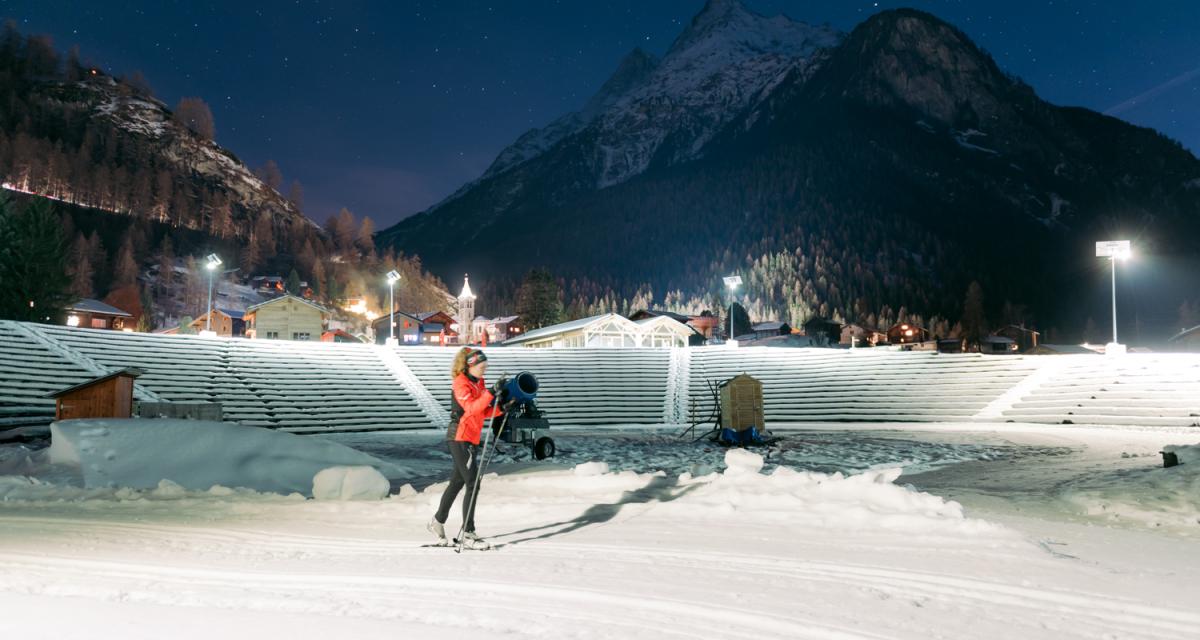
The Evolène case in Switzerland is particularly telling. It involves lighting a cross-country ski trail in a mountain environment, combining the most demanding winter constraints in a single project. Cold temperatures, limited sunlight, seasonal operation, and difficult site access. The system has run reliably and autonomously for several years despite extreme cold and limited sunlight, with no maintenance required since installation.
This type of context is especially valuable, as it combines all the most critical winter constraints: cold, seasonality, usage, and accessibility.
Key takeaways for extreme cold
Solar lighting can perform reliably in very cold climates, but that reliability depends entirely on how the project is approached. Winter sizing, energy management, storage validation, and coherent site integration all work together as a system. In extreme cold, continuous lighting is achieved through a rigorous methodology, fully aligned with the real winter conditions of the site.