
How to integrate solar lighting solutions into a city centre?
What are the challenges of integrating solar lighting in a city centre?
The aim is to illuminate central areas: forecourts, squares, pathways, and parks, to bring life and support nighttime activities, without altering the character of the place or relying on extensions of the electrical grid. In city centres, constraints are often significant: already developed surfaces, heritage protection, traffic management, and tight timescales. Yet expectations are equally high: safety, comfort, clear wayfinding, and aesthetic integration.
In this context, the value of solar lighting goes beyond energy savings. Above all, it is a tool for integration: it allows light to be placed exactly where it is needed, with simplified implementation, provided a clear process is followed and the appropriate solutions are selected.
Integrating solar lighting in city centres is about choosing the right uses
In city centres, the key question is not only “how should we illuminate?” but also:
-
Where should safety be prioritised? (crossings, public facilities, waiting areas, entrances, stops)
-
What level of lighting is required? (guidance lighting, ambient lighting, functional lighting)
-
Which architectural identity must be respected? (materials, colours, and whether discretion or scenography is desired)
This is precisely where solar lighting proves its worth: it provides flexibility in placement and allows light to be treated as a tool for both practical use and urban composition.
Areas where solar lighting is most relevant in city centres
-
City centres and pedestrian zones: Continuity of lighting, visual markers, soft safety without glare.
-
Forecourts of public facilities (town halls, libraries, stations): scenography, guidance, and clear access routes.
-
Town and village squares: ambient lighting combined with circulation guidance, adaptable to scenarios such as events, seasonal activities, or schedules.
-
Parks and gardens: low, discreet lighting focused on pathways, compatible with biodiversity and dark-sky policies where relevant.
Engineering process: simple but structuring
To ensure performance and autonomy, Fonroche Lighting’s design office follows a clear and defined process:
-
Needs identification: nighttime uses, safety zones, expected service levels.
-
Collection of meteorological site data: solar exposure, local climate, and installation constraints.
-
System sizing: production, storage, and consumption tailored to actual requirements.
-
Evaluation: summary of expected performance and recommended layouts.
-
Adjustments: optimisation based on urban constraints such as aesthetics, traffic, and maintenance access.
-
Installation layout: final positioning of luminaires for coherent and efficient integration.
Which solar lighting solutions for a city centre?
Nowatt solar bollards - guiding, structuring, securing
In city centres, solar bollards are ideal for guiding and securing pedestrian paths, parks, public facilities, and transition areas between streets and living spaces. Their function is simple: guide, reassure, and structure routes without cluttering the space.
The Nowatt range offers several approaches, each exploring different relationships between material, light, and use:
-
OKO: A discreet presence for pedestrian paths.
-
FOLLOW: A design that confidently asserts its presence.
-
BRUT: An architectural approach playing with materiality and light perception.
Installation example:
Agen (France) – Pathway for the Gozoki company equipped with OKO bollards.
Crystal bollard - ideal for forecourts and signature lighting
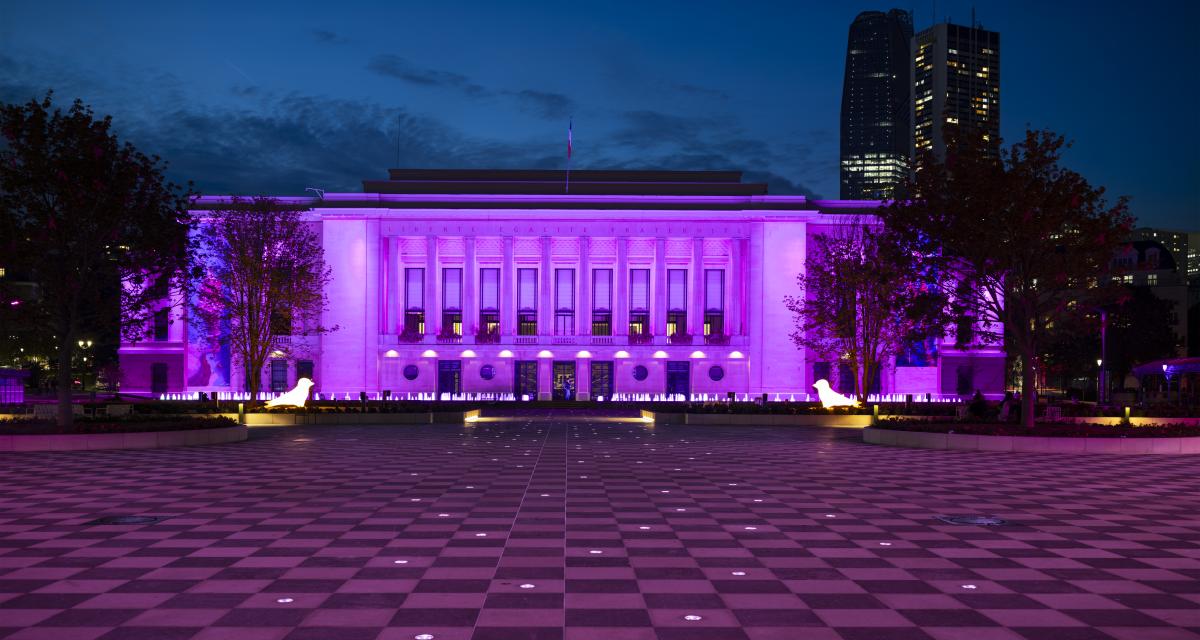
Crystal bollards are particularly suited to forecourts and esplanades: they create legible ground-level lighting, structure the space, and secure soft mobility without requiring a grid connection.
Installation example:
Puteaux (France) – City Hall forecourt with 300 autonomous Crystal solar bollards.
Follow UP column - lighting living spaces, punctuating urban areas
The Follow UP column goes beyond mere lighting. In city centres, it creates landmarks, expresses a new urban identity, and restores light as a meaningful marker of collective space.
FAQ – Integrating solar lighting in city centres
Where does solar lighting bring the most value?
Pedestrian areas, forecourts of public facilities, village squares, parks, gardens, and soft mobility routes.
Is a study required?
Yes. A lighting and solar study ensures correct positioning of luminaires and validates autonomy according to sunlight and lighting requirements.
Does solar lighting require more maintenance?
No. Fonroche Lighting’s autonomous solutions require no maintenance for over 10 years. The first maintenance, typically between 12 and 15 years, involves battery replacement.