Climate constraints that put public lighting to the test
Strong winds: gusts, storms and exposed areas
Along coastlines, on breakwaters, in exposed areas or along certain road corridors, wind creates constant mechanical stress. Gusts and turbulence generate forces, vibrations and progressive fatigue on assemblies if the installation and structural resistance are not properly managed.
The robustness of a solar streetlight therefore depends not only on the luminaire itself, but also on the installation logic, fixings and the overall consistency of the deployment.
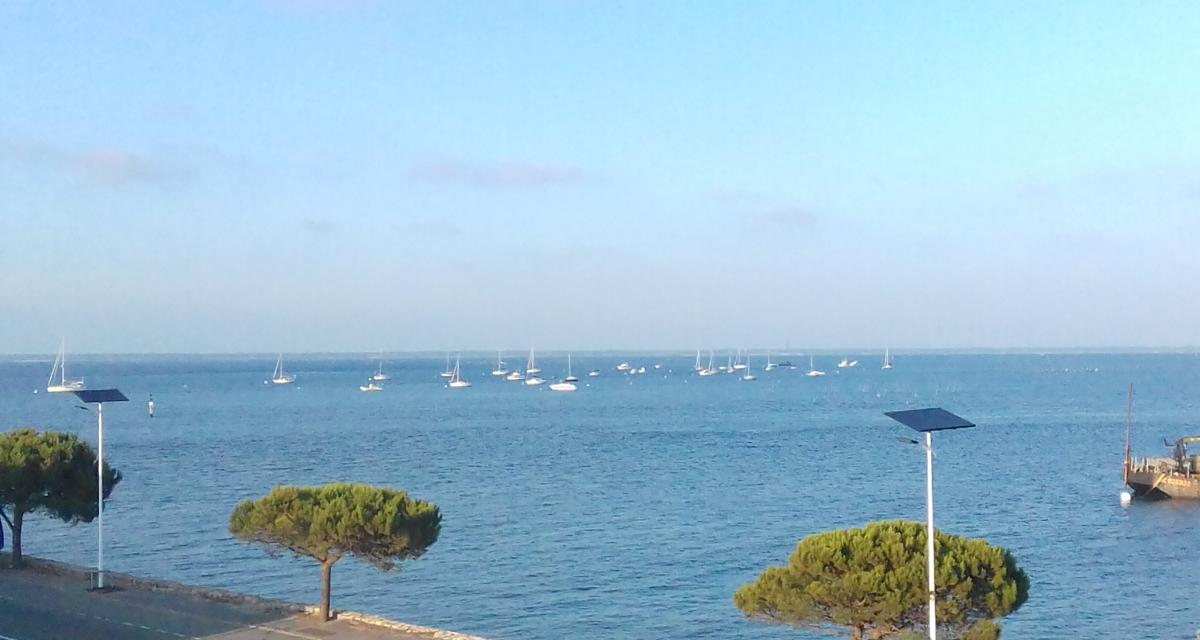
Field example: Arcachon Bay
A coastal environment exposed to strong winds, where solar lighting columns have been installed along breakwaters and seaside areas.
→ See the project
Heavy rainfall and tropical climates
Rain is often accompanied by persistent humidity, water projections and hot, humid cycles that can repeat frequently in tropical climates. These conditions put sealing, interfaces and long-term component durability to the test.
In these contexts, the reliability of a solar street lighting system depends on design quality, waterproofing tests and material validation.
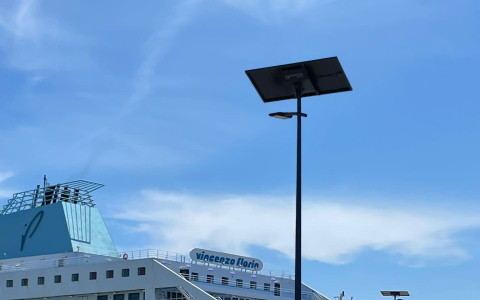
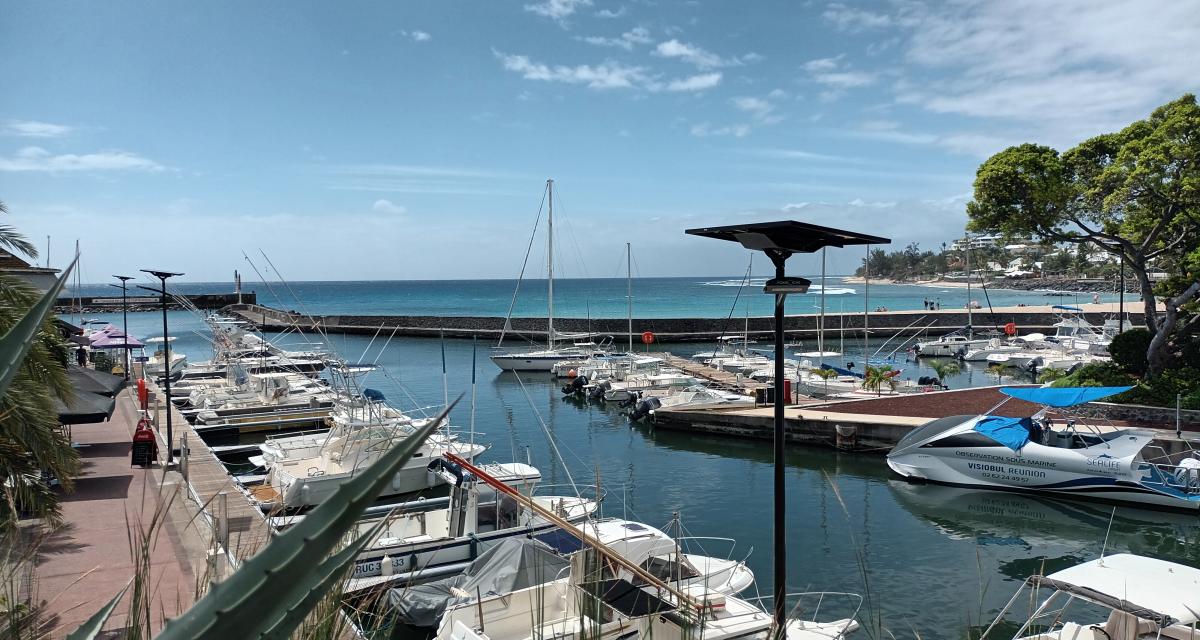
Field example: Port of Saint-Gilles, Réunion Island
A project deployed in a humid tropical environment exposed to repeated hot and humid cycles.
→ See the project
Snow, frost and long winters: ensuring lighting continuity
In mountainous or continental regions, cold conditions act on several levels: freeze–thaw cycles, frost, snow, long nights and periods less favorable for solar production.
In these conditions, an autonomous solar streetlight must be properly dimensioned to maintain lighting continuity even when weather temporarily limits solar input.
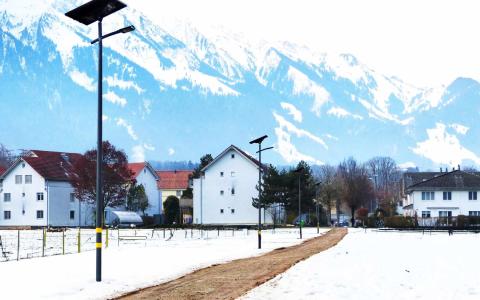
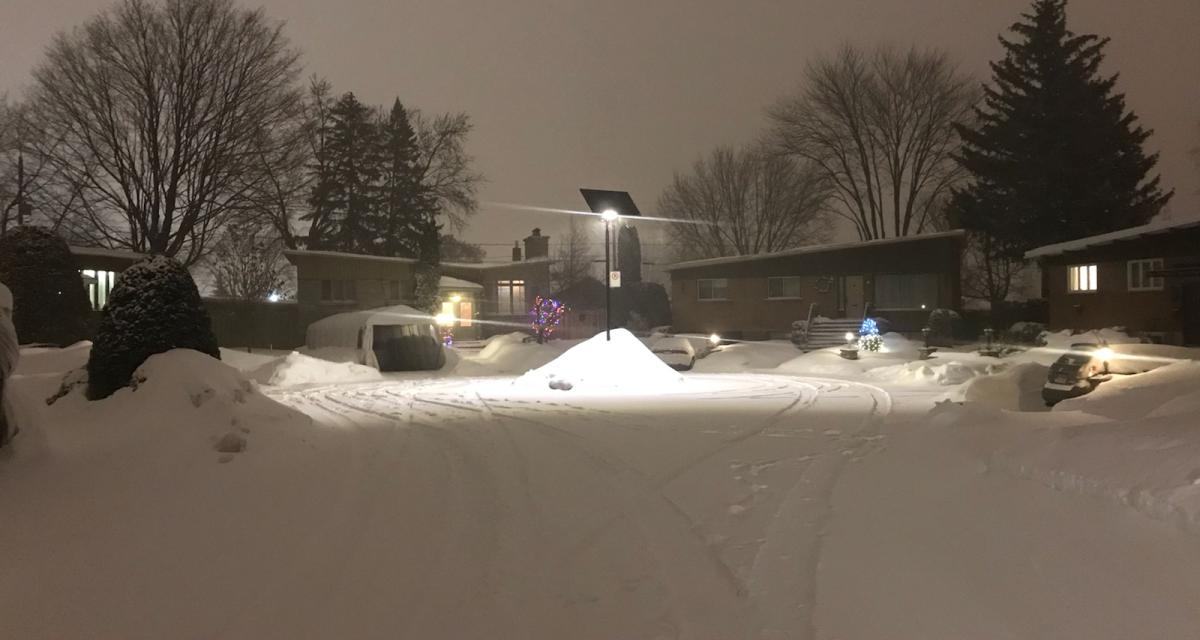
Field example: Laval, Canada
A solar street lighting project deployed in a continental region exposed to long, snowy winters.
→ See the project
Hail and impacts: resistance of exposed surfaces
Hailstorms can generate direct impacts on exposed components. The durability of a solar street lighting system therefore depends on the ability of surfaces and components to absorb impacts without compromising system integrity.
Extreme heat, UV exposure and arid climates
In hot and highly sunny climates, the constraint is twofold: high temperatures and strong UV radiation. Materials, finishes and thermal balance must remain stable over time to ensure the durability of solar streetlights installed in these environments.
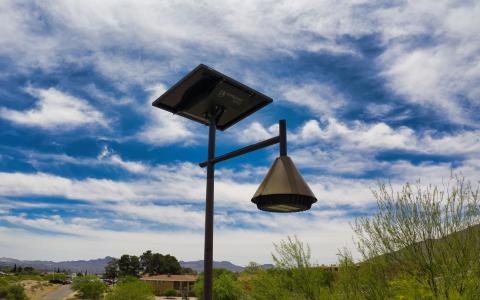
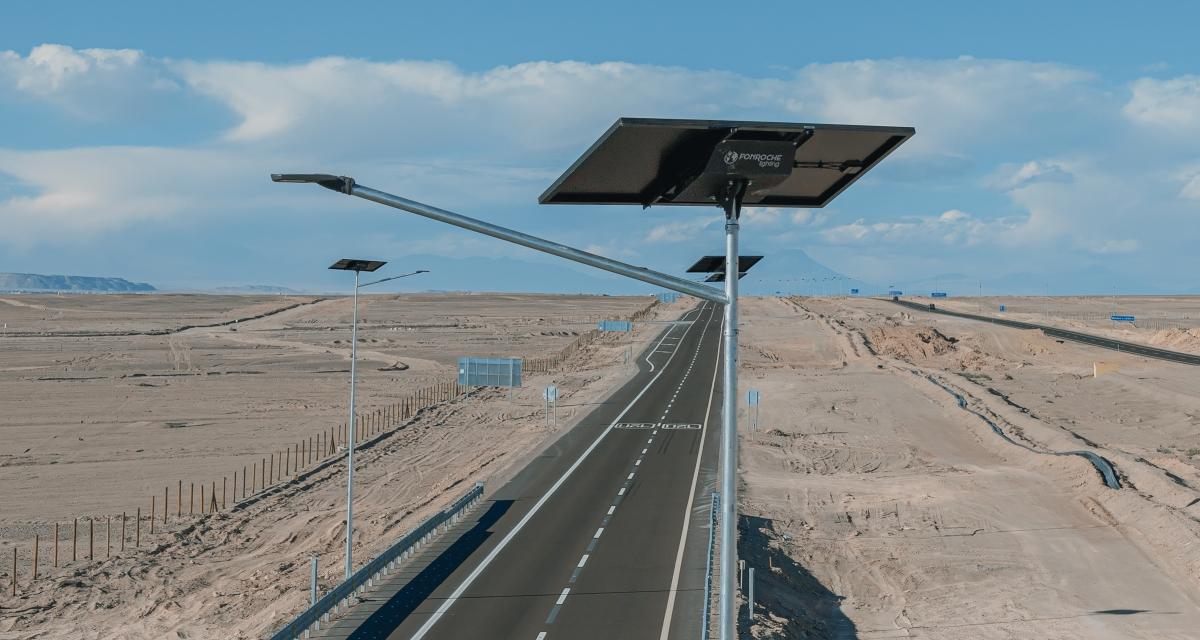
Field example: Rutas del Loa, Atacama Desert (Chile)
One of the most arid and sun-exposed environments on the planet. A project illustrating equipment durability under extreme heat and radiation.
→ See the project
Coastal environments: salt corrosion and sea spray
In coastal environments, the main constraint is salt corrosion. It does not only affect visible surfaces; it often starts on interfaces, screws, base plates, edges and micro-scratches.
The durability of solar street lighting therefore relies on consistent anti-corrosion protection and thorough validation of technical solutions.
→ Learn more: Is solar street lighting really compatible with coastal installations?
Flood-prone areas and risk zones
In flood-prone areas, lighting infrastructure may be exposed to events that can disable grid-connected systems, complicate maintenance access or delay service restoration.
A properly installed autonomous solar streetlight can provide operational advantages in such contexts: service continuity during events and reduced dependence on underground infrastructure that may be damaged.
Why solar lighting becomes relevant when climate is a constraint
Solar street lighting is not just a panel and a lamp. An autonomous solar streetlight is a complete system combining photovoltaic generation, battery storage and LED lighting to ensure stable nighttime lighting service, independently of the electrical grid.
When environments become demanding, three elements make the difference.
-
Site-specific design: Engineering teams consider usage, solar irradiation, meteorological data, local conditions and expected service levels to achieve realistic autonomy.
-
Component validation: Critical components are tested for durability and performance in dedicated facilities such as the Power Room and the Light Room.
-
Installation consistency: Lighting studies and scenario validation ensure light is positioned where it is needed with the appropriate lighting levels.
An autonomous solution therefore requires a serious site study, rigorous installation and consistent system dimensioning. Without this, performance may degrade during the least favorable periods.
Frequently asked questions
Is solar lighting compatible with difficult climates such as snow, wind or tropical environments?
Yes. Solar street lighting can operate in difficult climates if the system is properly dimensioned for the site and validated for severe conditions. Weather constraints must be addressed during the design and planning stages.
Why is site-specific design so important for a solar streetlight?
Because each territory has its own climatic conditions. A generic design is not sufficient: local solar irradiation, wind conditions, temperature variations and the least favorable periods must all be considered to ensure realistic year-round autonomy.
Why is the battery a key component in a solar streetlight?
Because it determines service continuity. Its long-term behavior under different climatic conditions is crucial, which is why extensive qualification and testing phases are carried out in Fonroche Lighting’s dedicated testing facilities.
What are the Power Room and the Light Room at Fonroche Lighting?
They are testing environments dedicated to qualifying critical components. They allow engineers to study equipment durability and anticipate how solar streetlights will behave in real conditions before deployment in the field.
Is solar lighting suitable for flood-prone areas?
A properly installed autonomous solar streetlight can offer operational advantages in such contexts: service continuity during flood events and reduced reliance on underground infrastructure that may be damaged. Each site is assessed individually.
Solar street lighting designed to adapt to real territorial conditions
Climatic constraints are part of the reality of territories. Wind, humidity, heat, snow or salt corrosion can challenge lighting infrastructure if it is not designed for these conditions.
In this context, solar street lighting has become a solution capable of adapting to a wide variety of environments. The performance of a solar streetlight depends not only on the technology itself, but also on how each project is studied, designed and installed according to local realities.
This comprehensive approach is what enables solar street lighting to support public infrastructure projects sustainably, even in territories exposed to the most demanding environmental conditions.
→ Do you have a project in a constrained environment?
Contact our engineering team for a feasibility study tailored to your site and local conditions.
Related articles
Explore by climatic constraint
-
Solar street lighting in coastal environments, salt corrosion and durability
-
Solar streetlights in winter, ensuring service continuity in cold regions
-
Solar street lighting in tropical climates, field experience
-
Solar lighting columns in windy areas, installation and robustness