
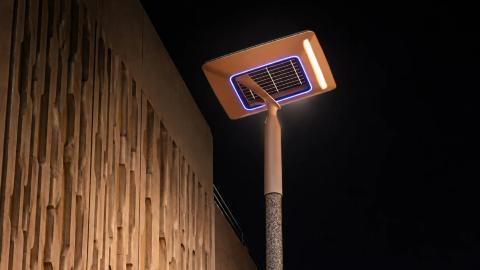
In Los Angeles, cable theft is undermining street lighting and the safety of nighttime travel. The city is accelerating its transition to off-grid lighting, with a goal of reaching 60,000 solar lighting units by 2028, the year it will host the Olympic Games.
A century of innovation in Los Angeles
At every major turning point in street lighting, Los Angeles has often been one step ahead.
As early as 1905, Los Angeles was developing one of the richest street lighting heritages in the world. With the creation of the Bureau of Street Lighting in 1925, the city demonstrated its commitment to significantly expanding its network by deploying several lighting solutions that were innovative for their time.
In 2009, Los Angeles once again became a pioneer in the field by launching the world’s largest program to convert street lighting to LED technology. More than 140,000 fixtures were replaced, delivering approximately 64% in energy savings and making the city an international benchmark for sustainable lighting and smart city development.
When vandalism puts safety at risk
In Los Angeles, copper cable theft leaves streets and intersections in the dark. Pedestrians and cyclists become less visible to drivers, compromising the safety of their nighttime travel. Approximately 30,000 streetlights are out of service across the city, and copper theft accounts for 40% of incidents.
For the City of Los Angeles, repairs do not always solve the problem. Replacement cables are sometimes stolen again. The city must pay for repeated work even as its resources are already insufficient to meet demand.

Karen Bass
Mayor of Los Angeles (CBS L.A)
For too long, the city’s response has been to replace copper cables with copper cables. And if you ask people how long that lasted, they’ll tell you: two weeks.
Under these conditions, replacing a failed streetlight takes an average of one year, prolonging travel difficulties in the affected areas. The city needs a solution that can quickly restore visibility while limiting repeated work and the associated costs.
A solar solution deployed in an emergency is transforming L.A.
Restoring lighting without waiting for the power grid to be repaired
In disaster-stricken neighborhoods, restoring lighting could not depend solely on rebuilding electrical infrastructure. Our solar streetlights restored nighttime visibility that supports safer conditions for road users and city services, regardless of how far those repairs had progressed.
The city can therefore install new lighting in an area without waiting for electrical service to become available again. After several years of testing and pilot projects, the emergency installations demonstrated their value under the real-world conditions of rebuilding Los Angeles.
The rollout is now expanding to other areas of the city. In October 2026, installation reaches a rate of around 150 streetlights per day. Eliminating grid connection work makes it easier to scale up and increase the number of installations as orders come in.
A cost-competitive solution
In Los Angeles, replacing a failed streetlight takes an average of twelve months. When cables are stolen again after repairs, city crews must repeat the work, incur additional costs, and leave residents waiting for lighting to be restored.
The economic benefit comes directly from this energy independence: with no power supply cables to steal, there is no need to repeat the work to replace those same cables. The city avoids the associated repair costs and reduces the need to assign crews to recurring jobs.
From the outset, the city also avoids trenching, cable installation, and grid connection work. During operation, the units incur no electricity costs for their power supply. This approach addresses Los Angeles’ budget constraints while reducing its reliance on a vulnerable grid.
Developing equipment to meet Los Angeles’ evolving needs

Laurent Lubrano
CEO of Fonroche Lighting
For more than 150 years, Los Angeles has demonstrated cities’ ability to reinvent how they light public spaces. Gas, electricity, LEDs: each generation has brought a technological breakthrough. At Fonroche Lighting, we are now writing the next chapter with solar street lighting. This technology does more than optimize existing infrastructure: it makes it possible to operate independently of the power grid and rethink the very way cities build their lighting systems.
Our collaboration with Los Angeles goes beyond replacing failed installations.
Years of testing and field feedback inform a collaborative innovation process to adapt equipment to the city’s expectations. Los Angeles continues its pioneering role by advancing both its installations and the way it manages its lighting.
Among the solutions being deployed, the Helia solar streetlight addresses several needs of such an extensive urban lighting system. Its remote monitoring and control capabilities allow teams to track equipment performance and adjust settings. These tools help the city expand its solar lighting installations and simplify day-to-day management.
Its tiltable LED module allows the light distribution to be adapted to the areas that need illumination. Integrated occupancy detection also makes it possible to adjust operation to actual use. These features give the city greater flexibility when equipping sites with different needs.
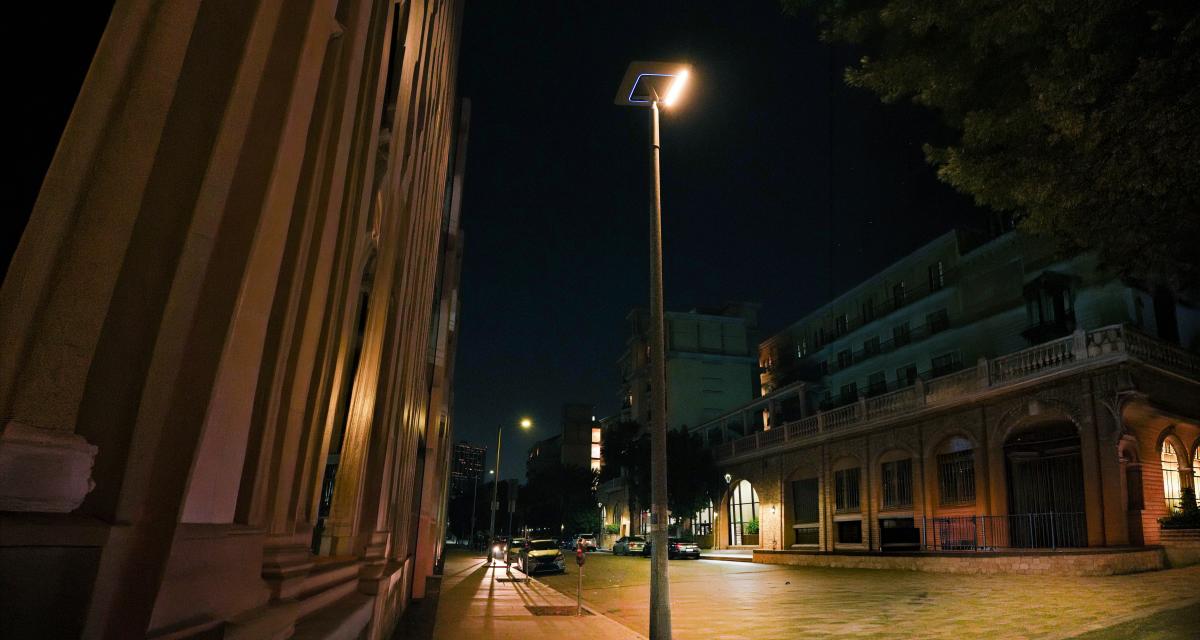
Integration into public spaces is also part of this evolution. Helia’s streamlined design and colored marker lighting combine visibility with a distinctive lighting identity, particularly during sporting or cultural events. Finally, its design allows for up to ten years of maintenance-free operation, while its eight-year parts-and-labor warranty addresses the city’s maintenance needs.

150.00
streetlights installed per day

$
0.00
in electricity costs to power the solar streetlights

60.00
solar streetlights targeted by 2028

The 2028 Games give new momentum to the city’s transformation
As the 2028 Olympic Games approach, Los Angeles is accelerating the modernization of its street lighting, with the goal of installing 60,000 solar streetlights.
The collaboration with our teams continues through a joint innovation process to develop equipment that meets the city’s expectations and supports the ways its public spaces are used.

Hocine Benaoum
Director of Fonroche Lighting America
The Los Angeles project was built on this relationship of trust, founded on strong competitiveness, unmatched deployment speed, and technology proven in more than 90 countries. So it was a natural choice for L.A.’s Bureau of Street Lighting to select us to help launch this new street lighting revolution alongside them.
Is your community facing the same challenge? Our lighting experts will conduct a detailed, customized study of your project, with no obligation. Request your study today and identify the solution best suited to your needs.

